


Supply Chain Management

Supporting the SDGs Goal


Goals
Performance Highlights 2025

Commitment, Challenge and Opportunity
The Company recognizes the role of the supply chain as a key mechanism connecting business operations with the creation of shared value for stakeholders across the entire production and service process. Committed to developing a network of responsible, transparent, and sustainability-aligned suppliers, the Company emphasizes the promotion of environmental, social, and governance (ESG) standards at all levels of the supply chain to enhance long-term business stability, resilience, and competitiveness.
However, operations in this area still face challenges due to the diverse structure of suppliers, particularly small enterprises that may lack the resources or readiness to comply with the sustainability standards set by the Company. Additionally, limitations in accessing information and effective monitoring systems may affect the overall continuity and transparency of the supply chain.


At the same time, the Company recognizes significant opportunities to elevate collaboration with suppliers toward joint sustainable development. This is achieved through promoting understanding, supporting knowledge sharing, and utilizing technology to enhance supply chain management efficiency,
which will increase business resilience, build stakeholder confidence, and support the organization’s overall sustainable development goals.
Management and Operational Approach
The Company is committed to sustainable supply chain management, covering from supplier selection and risk assessment to the development and promotion of suppliers for mutual growth. Emphasis is placed on efficiency, transparency, and responsibility toward environmental, social, and governance (ESG) aspects. The Company’s approaches include:
- Establishing a Supplier Code of Conduct that upholds human rights, environmental responsibility, and good governance throughout the production of goods and services.
- Conducting ESG risk assessments with key suppliers, particularly Tier 1 suppliers, to establish shared standards in environmental performance, safety, labor, and governance.
- Systematically selecting and categorizing suppliers based on transaction volume, strategic importance, and business impact.
- Conducting regular onsite audits with key suppliers to ensure proper compliance with ESG requirements.
- Promoting the use of environmentally friendly materials or products within the supply chain, such as eco-products and biodegradable packaging.
- Establishing a system to monitor and report supply chain risks to address emergencies or potential disruptions.
- Communicating business policies and codes of conduct to partners to ensure mutual understanding and support long-term sustainable growth.
Supplier Risk Assessment
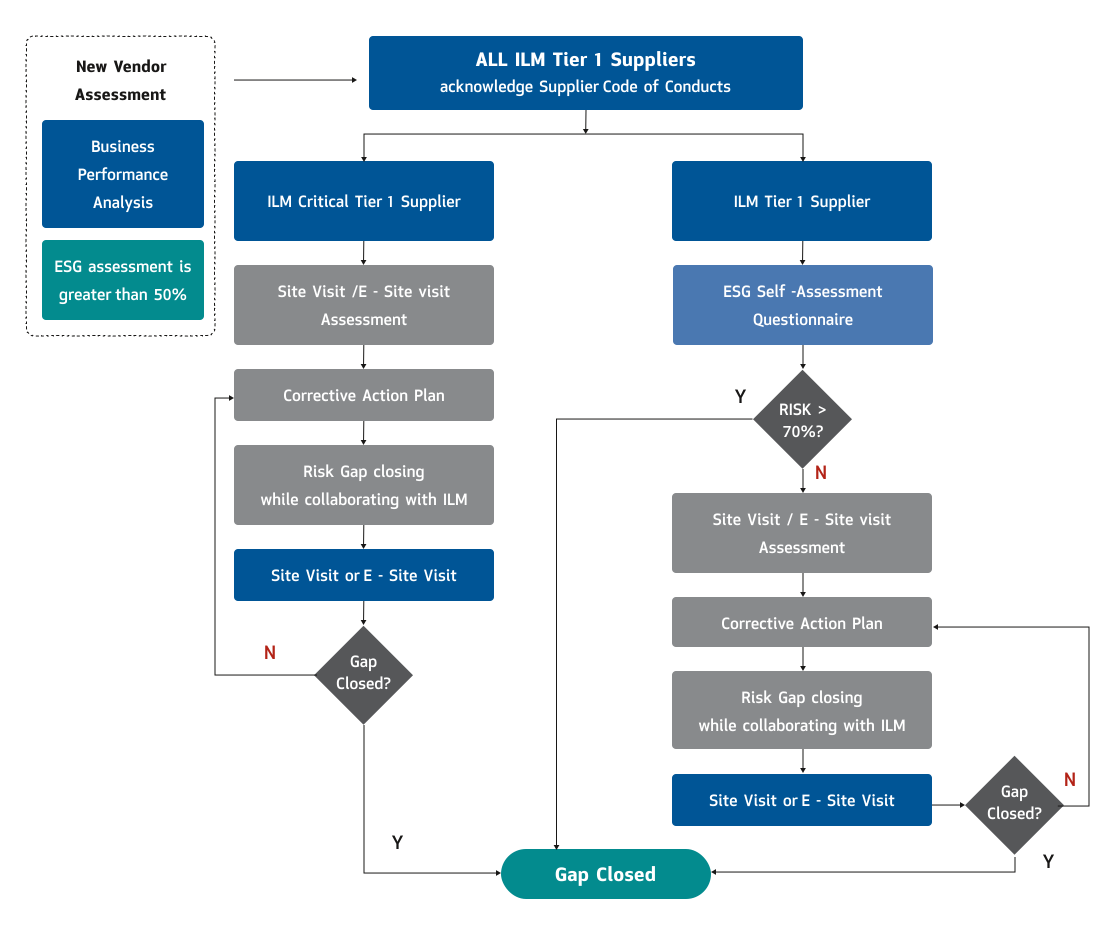
- Critical Tier 1 suppliers undergo ESG risk assessment through self-assessment at least once a year.
- All 25 Critical Tier 1 suppliers’ facilities have been visited onsite, achieving 100% coverage.
- The assessments cover environmental, social, and governance topics, such as greenhouse gas emissions, child labor, workplace safety, data protection, and anti-corruption.
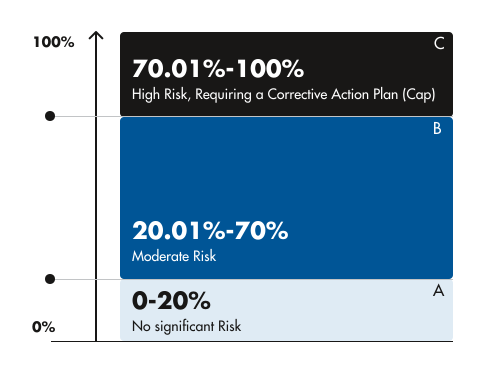
- Risk scores are assigned based on a defined index, with results categorized into three levels:
- A (0–20%): No significant Risk
- B (20.01–70%): Moderate Risk
- C (70.01–100%): High Risk, Requiring a Corrective Action Plan (Cap)
Assessment and Monitoring Process
- The Company conducts assessments annually, analyzing both the likelihood and severity of impacts (Impact × Likelihood).
- For suppliers identified with high risks, follow-up on improvements is conducted according to the specified plan, with a re-assessment carried out within six months.
- Suppliers that are unable to meet the required standards may be considered for discontinuation of cooperation in the future.
These approaches reflect the Company’s commitment to developing a supply chain that is resilient, transparent, responsible, and capable of adapting to changes in all contexts of modern business.
Supplier Risk Assessment Process
Projects / Activities

Identification of Critical Suppliers
Suppliers, including both Tier 1 and Non-Tier 1, are prioritized based on purchase value (Spend analysis), strategic importance, and potential risks.

ESG Risk Assessment for Critical Suppliers
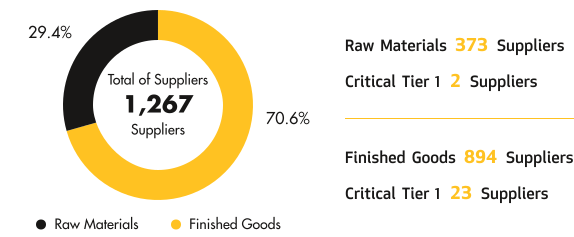
Conducted ESG (Environmental, Social, and Governance) risk assessments for 25 key suppliers in the Critical Tier 1 group.

Onsite Audit
ESG audits were conducted with 25 key Critical Tier 1 suppliers to ensure compliance with sustainability standards.

Development of the ESG Supplier Assessment Framework
Developed a supplier assessment framework across three main dimensions: Environmental, Social, and Governance, with plans to apply it to new partners starting in 2025.
Total of Suppliers

Supplier Performance Evaluation
Regarding performance results, the company has communicated its sustainable procurement guidelines to 100% of suppliers within its system. From onsite ESG audits conducted with 25 key suppliers, no high-risk issues were identified. All suppliers achieved a Grade A evaluation, with an average risk score of 15%, reflecting the company’s effective and sustainable supplier management practices.
In cases where suppliers exhibit sustainability-related risks, the company engages in discussions with those suppliers to communicate issues and jointly identify solutions. Mitigation measures include enhancing understanding of sustainability based on the ESG framework, providing training and knowledge-sharing programs, and supporting suppliers in improving their sustainability performance. In addition, the company implements corrective actions and holds joint meetings with suppliers to improve operations when non-compliance with company guidelines is identified. Notably, in 2025, the company found no economic, social, or governance risks arising from its suppliers.
Beyond the measures mentioned above, the company has established a Supplier Development Program to strengthen and enhance suppliers’ capabilities across operational efficiency as well as environmental, social, and governance (ESG) dimensions. The objective is to ensure that suppliers are able to adapt, remain resilient, and grow sustainably in a rapidly changing environment.Currently, 64 suppliers participate in this development program, which is guided by the following core principles:
Cost –Collaborative Cost Reduction
- This principle emphasizes working closely with suppliers to identify and eliminate inefficiencies within processes through value engineering analysis, productivity improvements, and process optimization. The focus is not on unsustainable price squeezing, but on creating win–win solutions that benefit both parties.
- Cost Transparency - The company promotes a shared understanding of cost structures through cost breakdown sharing and Total Cost of Ownership (TCO) analysis to identify opportunities for sustainable cost reduction.
Product Development
- Co-Development - Suppliers are invited to participate in the product development process from an early stage (Early Supplier Involvement) to leverage their expertise and innovation, shorten development timelines, and enhance competitiveness.
- Knowledge and Technology Sharing - This principle fosters two-way knowledge transfer between the company and suppliers, including joint investment in technical development and innovation capabilities.
Business Relationship
- Strategic Partnership - Suppliers are viewed as long-term strategic partners rather than merely product providers, with an emphasis on trust-building, open communication, and involvement in strategic planning.
- Two-Way Communication - The company establishes effective communication channels, holds regular joint meetings, and implements 360-degree feedback mechanisms to strengthen collaboration and mutual understanding.
Quality
- Quality at Source Develop quality control systems at the supplier level to prevent defects from the source, reduce redundant inspections, and enhance confidence in product quality.
- Continuous Improvement Foster a culture of ongoing quality improvement through the use of tools such as Kaizen, Six Sigma, and the sharing of best practices.
Supply Chain
- Supply Chain Visibility Enhance transparency and end-to-end visibility across the entire supply chain, including sub-tier suppliers, to better manage risks and increase resilience.
- System Integration Integrate information systems and operational processes between the company and suppliers, such as through EDI, API integration, and shared planning systems to improve efficiency and reduce errors.
Sustainability & ESG
- ESG Standards Elevation Collaborate with suppliers to develop and enhance environmental, social, and governance (ESG) standards through consultation, training, and support for investments in clean technologies.
- Shared Responsibility Build shared accountability for environmental stewardship, social responsibility, and good governance throughout the entire supply chain, including regular monitoring and ESG performance reporting.
- Sustainable Product Initiative The company promotes environmentally friendly products across all dimensions by selecting products made from natural materials, free from hazardous chemicals, certified by internationally recognized environmental standards, and with low carbon footprints. The company also adopts biodegradable packaging and prioritizes products and packaging certified by the Forest Stewardship Council (FSC), focusing on sourcing paper, furniture, and office supplies from sustainably managed forests. This includes supply chain verification and educating suppliers on the importance of sustainable forest management.
For recycled products, the company promotes goods made from recycled materials, implements take-back programs for used packaging, supports upcycling products, and selects products containing post-consumer recycled content to foster a sustainable circular economy.
These six principles do not operate independently but are integrated into a single, cohesive system, with shared goals, holistic performance measurement, and balanced development across all dimensions. This approach aims to build strong, high-performing suppliers that can grow sustainably together with the company over the long term.
The application of these principles enables the company to strengthen its competitive advantage, reduce risks, and create added value for all stakeholders within the business ecosystem.
Stakeholders Directly Impacted

Customers
Benefits Received
- Receive products that are high-quality, safe, and produced through transparent processes.
- Able to verify the origin of raw materials (traceability).
- Confidence in the environmental and social standards of the products.
Potential Impacts
- Product prices may increase due to the use of raw materials or production processes that meet ESG standards.
- There may be limitations in product variety during the transition of supply chain management.

Employees
Benefits Received
- Gain new knowledge and skills related to sustainable supply chain management.
- Work within a system that is standardized, safe, and responsible.
- Take pride in being part of an organization that cares about the environment and society
Potential Impacts
- Need to adapt to more stringent procurement or audit processes.
- Increased workload from monitoring suppliers’ ESG information.

Shareholders
Benefits Received
- Enhance ESG and sustainability image, increasing the organization’s credibility in the capital market.
- Reduce risks from environmental violations within the supply chain.
Potential Impacts
- Initial costs for supplier auditing and development may increase.
- Payback period may be extended due to the transition to a sustainable system.

Business Partners
Benefits Received
- Receive support to develop capabilities according to ESG guidelines, enhancing competitiveness in the market.
- Build long-term business partnerships and trust with the Company.
- Increase opportunities to enter new markets that prioritize sustainability.
Potential Impacts
- Need to adjust production systems or raw material sourcing to comply with ESG requirements.
- May incur additional costs from adaptation or be impacted if failing to meet the Company’s selection criteria.

Communities and Society
Benefits Received
- Affected by business operations that reduce environmental impact in the area.
- Have opportunities to collaborate in developing the local economy, such as sourcing materials from the community.
Potential Impacts
- If supply chain management is not stringent, it may cause environmental or social impacts in the surrounding area.
- There may be misunderstandings or misaligned expectations regarding the standards set by the Company with local suppliers.

Government and Others Agencies
Benefits Received
- Receive cooperation from the Company in driving green economy policies and supply chain audits.
- Obtain transparent and verifiable information to be used in assessing the sustainability of the industry.
Potential Impacts
- Increased workload in monitoring compliance of operators and suppliers with standards.
- Policies need to be updated to keep pace with changes in the sustainable supply chain system.
