Water and Wastewater Management

Supporting the SDGs Goal


Goals
Performance Highlights 2025

Commitment, Challenge and Opportunity
The Company places great importance on water as a natural resource essential to its business operations and the sustainable well-being of surrounding communities. Therefore, the Company is committed to managing water and wastewater efficiently, safely, and in an environmentally friendly manner. This commitment is guided by principles of reducing raw water consumption, promoting the use of recycled water, and reusing water whenever possible, as well as developing and improving wastewater treatment systems to meet legal quality standards so that treated water can be reused. The Company aims to reduce net water usage per revenue by 10% and increase the proportion of recycled water by 10% by 2027 compared to the 2023 baseline. These strategic targets promote efficient resource use and support the Sustainable Development Goals (SDGs), particularly Goal 6: Clean Water and Sanitation.
However, water management still faces a variety of challenges, both in terms of the quantity and quality of water sources, as well as the management of internal systems in buildings and branches systems where water consumption patterns differ by size and type of activity Controlling water usage by tenants in certain branches or at The Walk shopping centers is also challenging, as enforcement cannot be fully mandated. Communicating to employees and stakeholders the importance of responsible water use, along with the investment costs for upgrading wastewater treatment and recycling systems, which may require a long payback period, remains a concern. Additionally, climate change further increases the risk of future variability in water sources, which may affect operations if appropriate planning and adaptation measures are not in place.
Upgraded the wastewater treatment system at Little Walk Bangna from an Activated Sludge system to a Membrane Bio Reactor (MBR) system to enhance treatment efficiency and improve effluent quality prior to discharge into the environment. (Investment: THB 2,798,888)
Conducted studies and assessments of water-related risks, including the implementation of preventive and corrective measures, as well as continuous water quality monitoring. (Investment: THB 410,032)
Studied and developed measures to mitigate water-related risks by installing inverter systems to optimize the operation of water pumping systems in buildings at The Walk Shopping Center, enhancing water use efficiency. (Investment: THB 1,771,800)
| Wastewater Treatment System, Wastewater Volume, and Annual Effluent Discharge | Wastewater Discharge Volume (cubic meters/year) | Wastewater Treatment Method | Destination |
|---|---|---|---|
| 2023 | 372,198.06 | Activated Sludge, MBBR, MBR |
|
| 2024 | 368,857.09 | Activated Sludge, MBBR, MBR | |
| 2025 | 468,122.76 | Activated Sludge, MBBR, MBR |
Furthermore, developing collaboration with tenants for water recycling, promoting responsible water use behavior among employees, and public sustainability communications highlighting achievements in water reduction and increased recycling are important mechanisms for enhancing the organization’s environmental image. These efforts may also lead to national or regional recognition,
such as awards for outstanding environmental and water management in shopping centers, thereby enhancing competitiveness and attracting investors interested in ESG.
Management and Operational Approach
The Company manages water use from both tap water and groundwater, with a maintenance and inspection plan for the internal water distribution systems across the head office, all Index Living Mall and The Walk branches, distribution centers, and factories to ensure continuous compliance with standards. Employees are regularly informed to promote water-saving practices and responsible water use. Regarding water management, the Company has established the following guidelines:
Management Mechanisms
Establishing a Water Management System at Worksites
Operational Guidelines
the Company utilize water from both tap water and groundwater sources to support various activities within the head office, all Index Living Mall and The Walk branches, distribution centers, and factories. The water distribution systems are designed to suit the specific usage characteristics of each type of facility, such as:
- Separation of piping systems for drinking water/general use water and water for sanitary systems
- Utilization of high-efficiency water pumps to control pressure and reduce water loss in the distribution system
- Installation of water meters separately for each building/area to manage and monitor monthly water usage
- Installation of an inverter system to control the operation of the building’s water pumps
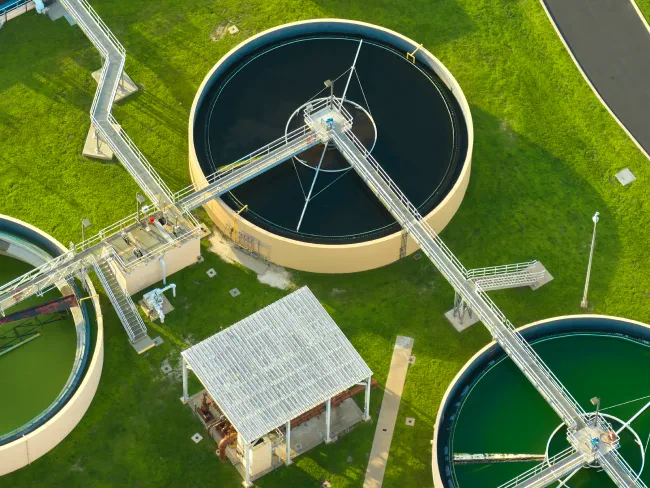
Inspection and Maintenance of the Water Distribution System
Operational Guidelines
The Company has established a Preventive Maintenance (PM) plan for all water distribution systems, with ongoing implementation of specific procedures, such as:
- Regularly inspect pipes and valves within the building for leaks
- Check the operation of water control equipment, such as valves, pressure pumps, and meters
- Monitor water quality for groundwater use to ensure cleanliness and contaminant levels meet legal standards

Employee Awareness and Communication Campaigns
Operational Guidelines
The Company emphasizes engaging employees at all levels in responsible water use through internal communications and activities, such as:
- Install awareness materials, such as “Save Water” campaign signs, at water usage points like restrooms, washbasins, and public areas
- Organize internal training sessions or meetings to educate employees on water conservation, such as reminders to turn off water when not in use, checking for leaks, or adjusting daily water use habits
- Encourage employees to report any water system issues observed in the workplace through internal channels, such as apps or suggestion/complaint boxes

Monitor and Analyze Water Usage Data
Operational Guidelines
The Company has a system for recording and monitoring monthly water usage and uses the data to analyze trends, such as
- Comparing water usage relative to revenue
- Setting medium- and long-term targets for water reduction or increasing the use of recycled water in production processes
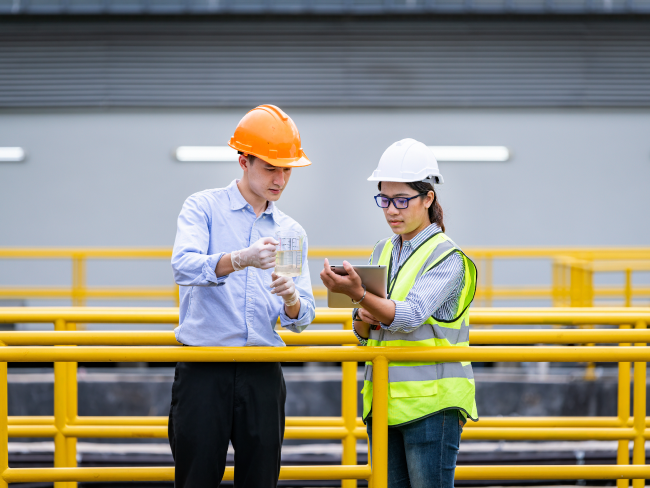
For wastewater management, the Company places great importance on ensuring wastewater quality. During 2022–2023, it implemented two pilot projects that applied innovative wastewater treatment technologies to upgrade its treatment systems; The Walk Shopping Center branches at Ratchaphruek and Kaset Nawamin. These projects utilized the Moving Bed Biofilm Reactor (MBBR) and Membrane Bioreactor (MBR) systems. The MBBR system adds specially designed plastic carriers to increase the surface area for microorganisms to attach, enhancing treatment efficiency. The MBR system combines microbial treatment to remove dissolved waste in water with filtration through a 0.4-micron membrane, which acts as a filter for the treated water, a form of the activated sludge process.
To ensure continuous and effective wastewater management that meets quality standards without impacting the environment and surrounding communities, the Company promotes continuous learning and adoption of innovative wastewater treatment technologies.
Additionally, treated water is recycled and reused (Zero discharge) to maximize water resource efficiency.
Stakeholders Directly Impacted

Shareholders
Benefits Received
- Reduce legal and environmental risks
- Enhance corporate image and sustainability – support long-term business performance
Potential Impacts
- There may be short-term costs associated with investing in wastewater treatment and water management system upgrades.

Customers
Benefits Received
- Confident in the brand’s environmental responsibility
- Able to use environmentally friendly products and services
Potential Impacts
- Product prices may increase if environmental costs are passed on to consumers.

Business Partners
Benefits Received
- Gain the opportunity to collaborate with organizations that uphold environmental standards.
- Gain the opportunity to collaboratively develop a sustainable supply chain.
Potential Impacts
- May need to adapt or comply with the environmental measures set by the Company, such as managing their own wastewater, etc.

Communities and Society
Benefits Received
- Reduces health and environmental risks by ensuring that the organization's discharged wastewater meets quality standards.
- Builds confidence in the organization.
Potential Impacts
- If the wastewater treatment system fails, it may affect the ecosystem and the quality of life of nearby communities.

Government and Others Agencies
Benefits Received
- Collaboration with private organizations that comply with environmental regulations
- Support the country’s sustainable development goals
Potential Impacts
- A rigorous monitoring and evaluation system is required to ensure that the organization’s operations align with what is reported.

Employees
Benefits Received
- Work in an organization that is environmentally conscious and sustainable.
- Receive training and raise awareness on the responsible use of water.
Potential Impacts
- May experience an increased workload due to water-saving measures or participation in the organization’s environmental activities.