
GHG Emission and Energy Management

Supporting the SDGs Goal


Goals
The amount of greenhouse gas reduction under the LESS project increase by 20% in 2027 compared to the base year 2022 (unit: tCO2e). Short-term: Increase by 20% by 2027 Medium-term: Increase by 25% by 2032 Long-term: Increase by 30% by 2037
Performance Highlights 2025
In 2025, participated in the LESS program with the Office of Natural Resources and Environmental Policy and Planning (ONEP) through four projects:
- installation of a solar power system
- waste sorting for recycling
- using organic food waste as animal feed
- upgrading to high-efficiency chillers
- EV Bike
representing an increase of 30.89% compared to the base year 2022

Commitment, Challenge and Opportunity
The Company places great importance on conducting its business alongside sustainable environmental stewardship, particularly in energy management and greenhouse gas (GHG) reduction. This encompasses electricity use, the management of oil and fuel, as well as the assessment and monitoring of carbon emissions from the Company’s operations. The Company has clearly defined policies, targets, and measures to drive sustainable development.
The Company is also committed to minimizing environmental impacts through continuous operational improvements, such as enhancing energy efficiency in offices, branches, distribution centers, and factories; installing Solar Rooftop systems to generate renewable electricity; using smart technologies to manage air conditioning and lighting systems; and promoting employee participation in energy conservation and carbon reduction. In addition, the Company has set long-term environmental goals, including achieving Net Zero emissions by 2065 and Carbon Neutrality by 2050, reflecting a strategic commitment to mitigating climate change.
Although the Company has clear environmental plans and projects, it still faces various challenges, such as fluctuations in investment costs for renewable energy technologies and high-efficiency systems, which may impact short-term cash flow. There are also limitations related to space or infrastructure for installing new energy systems in some branches or distribution centers. Moreover, tracking, measuring, and reporting GHG emissions in compliance with standards such as the GHG Protocol or ISO 14064 remains a data-intensive challenge that requires coordinated efforts across the organization. Additionally, it is necessary to enhance employees’ and partners’ understanding of their roles in contributing to GHG reduction.


At the same time, energy management and GHG reduction present significant opportunities for creating business differentiation. The Company can generate added value by being an environmentally responsible organization, aligning with the expectations of modern consumers and ESG-conscious investors (Environmental, Social, Governance). Furthermore, investing in renewable energy and high-efficiency systems helps reduce long-term energy costs and mitigate risks associated with future changes in carbon regulations or environmental policies, such as carbon taxes or national and international environmental requirements.
At the same time, ILM can leverage its carbon reduction data as a communication tool to demonstrate sustainability and build trust among all stakeholders, including shareholders, customers, partners, and surrounding communities.
Management and Operational Approach
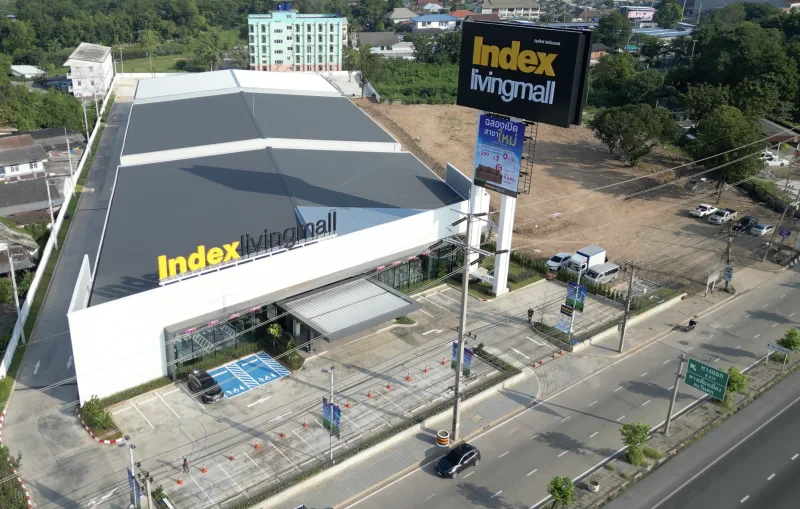
The Company recognizes the importance of the impacts and risks related to greenhouse gas management and energy management. In 2025, the Company developed the Green Retail Store project at Index Living Mall, Saraburi branch, as Thailand’s first energy-efficient retail building prototype and the first in Southeast Asia. This project serves as a new landmark, offering a comprehensive range of home products and services
while also functioning as a safe zone that enhances the quality of life for everyone inside the building, a ‘Zero Energy Building’

In addition, the Company has continued installing solar power systems (Solar Rooftop) since 2018, in order to use clean energy instead of electricity from the grid at Index Living Mall branches, The Walk, distribution centers, and factories. At present, 29 installations have been completed to promote sustainable energy savings. The Company has also participated in the Low Emission Support Scheme (LESS) by the Thailand Greenhouse Gas Management Organization (Public Organization) (TGO). In 2025, these efforts contributed to a reduction of 8,107.29 tons of carbon dioxide equivalent (tCO₂e) in greenhouse gas emissions.
To demonstrate its commitment to effective greenhouse gas reduction and energy management, the Company has established environmental policies and practices related to managing GHG emissions and energy usage as follows:
- Conduct the Company’s business and activities in compliance with relevant environmental laws, regulations, requirements, and international standards, and continuously monitor, review, and assess operations.
- Commit to conducting business that minimizes environmental and climate impacts, and strive to protect, preserve, and restore ecosystems while mitigating global warming, as well as sourcing and developing environmentally friendly product innovations.
- Energy Conservation: Promote the sustainable use of natural resources, energy, and water; reduce greenhouse gas emissions that impact climate change to move towards a low-carbon society; support the use of renewable energy; improve energy efficiency in activities and processes; and manage operations to enhance transportation efficiency.
- Waste Management: Commit to reducing and controlling waste across the supply chain from upstream to downstream. The Company’s policy is to apply the 3Rs concept (Reduce, Reuse, and Recycle), including minimizing usage, reusing, and recycling in waste management to ensure effective handling of various wastes. For operational waste and industrial residues that cannot be treated or managed through the 3Rs process, the Company ensures proper treatment and disposal in accordance with scientific and technical standards.
- Optimized Resource Use: Support responsible consumption by developing and promoting environmentally friendly products (Eco Products) and encouraging responsible use of plastics (Responsible Plastic Consumption).
- Climate Change: Commit to overseeing and managing risks and opportunities related to climate change, assessing greenhouse gas emissions, and establishing action plans to reduce direct and indirect GHG emissions (Scope 1, 2, and 3) in alignment with climate management goals and strategies.
- Enhance knowledge and awareness, provide training, consultation, and foster participation in environmental management and greenhouse gas reduction for employees, relevant working groups, and stakeholders, as well as appropriately support related resources.
The Company also operates under the following guidelines:
- The Company has developed new products focusing on expanding the share of Eco Products, including environmentally friendly furniture and home décor. In addition, internal activities have been initiated to raise employee awareness on energy use, environmental issues, and greenhouse gas reduction, ensuring that all parties participate in achieving the Company’s environmental sustainability goals.
- Develop and maintain electrical system control equipment, as well as raise employee awareness on electricity conservation. The Company has also expanded the installation of solar rooftop systems across the group of companies to increase the use of renewable electricity.
- Implement energy management projects aimed at reducing the organization’s greenhouse gas emissions, such as the Solar Rooftop project, the Energy Saving project, and the INDEX GOES GREEN’s project, among others.
- Fuel and Oil Management: The Company manages fuel and oil in a systematic and comprehensive manner, starting from the establishment of refueling stations within distribution centers to the regular maintenance of transport vehicles. These measures have significantly improved the efficiency of energy use control and management.
- Promote and implement various projects to support greenhouse gas reduction, such as the Forest Restoration Seedling Planting Project, the Low Emission Support Scheme (LESS), and the Thailand Voluntary Emission Reduction Program (T-VER).
Climate Change
Index Living Mall Public Company Limited ("the Company") recognizes that climate change is a critical challenge affecting the economy, society, the environment, and long-term business continuity. The Company is committed to conducting its business responsibly toward the environment under the concept of “Sustainable Living for Future Lifestyle” by integrating climate change management into its business strategy, risk management framework, and operations throughout the value chain. This approach supports the transition to a low-carbon economy and demonstrates the Company's commitment to limiting global warming to no more than 1.5°C, in line with the Paris Agreement and the United Nations Framework Convention on Climate Change Conferences of the Parties (UNFCCC COP).
At the same time, the Company supports Thailand's climate initiatives, including the ongoing development of the country's Climate Change Act. The Company strives to reduce greenhouse gas emissions, improve energy efficiency, promote the use of clean energy, and develop environmentally friendly products and services. It also seeks to strengthen collaboration with stakeholders across all sectors in addressing the impacts of climate change.
Direction and Operational Approach
The Company aims to develop into a Climate-Resilient Business that can rapidly adapt to, prevent, and recover from climate-related impacts, thereby minimizing potential damages and ensuring business continuity. In pursuing this goal, the Company considers both physical risks, such as floods, droughts, and heatwaves, and geopolitical risks, which may affect raw material sourcing, manufacturing processes, and logistics costs.
The Company also recognizes transition risks, which may arise from environmental regulations, carbon taxation measures, emerging technologies, and shifting consumer preferences toward more environmentally friendly products. As a result, the Company places significant importance on assessing and managing climate-related risks while simultaneously seeking new business opportunities arising from the growth of the green economy.
To achieve these objectives, the Company establishes clear strategies, targets, and key performance indicators to improve resource efficiency, reduce greenhouse gas emissions, and enhance the adaptive capacity of its business operations. Furthermore, the Company is committed to conducting its operations with transparency and accountability, while continuously monitoring performance and disclosing progress to stakeholders. Through these efforts, the Company aims to support sustainable development and create long-term value for all stakeholders.
The Company has developed new products focusing on expanding the share of Eco Products, including environmentally friendly furniture and home décor.
In addition, internal activities have been initiated to raise employee awareness on energy use, environmental issues, and greenhouse gas reduction, ensuring that all parties participate in achieving the Company’s environmental sustainability goals.
Stakeholders Directly Impacted

Shareholders
Benefits Received
- Increase share value from a positive image and business sustainability.
- Reduce risk from environmental regulations.
Potential Impacts
- High initial investment costs may affect short-term profits, and project returns may be uncertain.

Customers
Benefits Received
- Use services from an environmentally conscious Company
- Increase confidence in the brand
Potential Impacts
- May incur indirect costs from higher product prices if adjustments are made due to green energy costs.

Business Partners
Benefits Received
- Participate in developing a sustainable supply chain.
- Increase opportunities in environmentally focused markets.
Potential Impacts
- May need to adapt to the Company’s energy and environmental policies, which could incur additional costs.

Communities and Society
Benefits Received
- Improved air quality from reduced greenhouse gas emissions.
- Promote job creation through clean energy projects.
Potential Impacts
- The construction of energy systems may have short-term environmental impacts, such as noise or dust.

Government and Others Agencies
Benefits Received
- The private sector supports government policies on carbon reduction.
- Reduce the government’s burden in environmental management.
Potential Impacts
- If the Company fails to comply with the established measures, additional legal enforcement may be required.
- Increased compliance costs to adhere to laws and regulations.

Employees
Benefits Received
- Improved and safer working environment.
- Pride in being part of an organization that is socially and environmentally responsible.
- Participation in projects provides opportunities to continuously enhance knowledge and best practices in energy management and greenhouse gas reduction.
Potential Impacts
- Must learn or receive additional training on the organization’s greenhouse gas management approaches and any new methods that may be introduced in the future.
- Building an organizational culture where all employees recognize the value of energy, the environment, and resource conservation may take several years.
Project Highlights