
Human Rights and Labor Practices

Supporting the SDGs Goal


Goals
Performance Highlights 2024

Commitment, Challenge and Opportunity
The Company conducts its business based on corporate governance principles with fairness and adherence to business ethics, striving to operate sustainably and responsibly towards society and all stakeholders. The Company respects human values and the equality of rights and human dignity. It promotes coexistence through mutual respect and recognizes the importance of respecting the human rights of all stakeholders potentially affected by its operations, including employees, business partners/suppliers, customers, consumers, local communities, and other stakeholders who may be impacted by the Company’s activities. The Company follows the United Nations Guiding Principles on Business and Human Rights (UNGP) as a framework for its human rights practices, based on the core principles of protecting, respecting, and remedying human rights. It also aims to prevent any human rights violations against all stakeholders within the Company’s business value chain arising from its operations.
Management and Operational Approach
The Company recognizes the importance of human rights and labor as a fundamental foundation for sustainable business operations, with a belief in respecting human dignity, promoting equality, and treating employees fairly.
This commitment also extends to customers, business partners/suppliers and all stakeholders across the business value chain. Furthermore, it is a factor that contributes to creating long-term value and serves as a guideline reflecting responsibility towards society and the environment. Adhering to these principles not only helps mitigate legal and reputational risks but also fosters trust and strong collaboration between the organization and its stakeholders.

Moreover, the Company upholds a comprehensive Human Rights and Labor Policy aligned with the United Nations Guiding Principles on Business and Human Rights (UNGP), Thai labor laws, and International Labour Organization (ILO) Conventions. This policy emphasizes respect for fundamental human rights, fair employment practices, non-discrimination, and the prohibition of child and forced labor. It also promotes workplace safety, occupational health, and a conducive working environment.
In practice, the Company has established operational guidelines founded on the principles of Protect, Respect, and Remedy to prevent and manage potential human rights risks. Regular human rights risk assessments and evaluations are conducted to ensure compliance and continuous improvement. Across the business value chain, the Company prioritizes communication and awareness-raising through training sessions and internal campaigns to foster a shared understanding and an organizational culture that respects human rights.
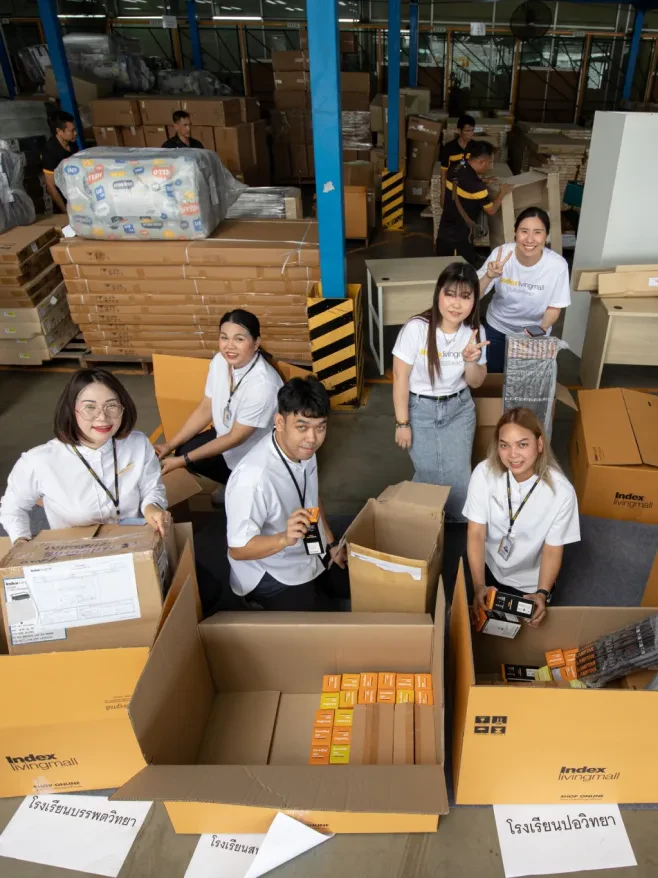

With regard to labor practices, the Company is dedicated to enhancing employee engagement and well-being by promoting flexible work arrangements, skill and capacity development, equitable benefits, and opportunities for employees to contribute to social and sustainable development initiatives. These efforts align with ILM’s vision of cultivating an organization that values its people as essential human capital and drivers of sustainable business growth.
Collectively, these initiatives reaffirm the Company’s commitment to upholding human rights and labor standards in line with principles of good governance and international best practices, forming a strong foundation for long-term trust and organizational sustainability.
Human Rights Policy
- Respect human dignity and prioritize the human rights of all individuals, including local communities, within the framework of applicable laws, human rights principles, and international labor standards, without discrimination.
- Conduct business activities with integrity, ensuring they do not negatively impact human rights or violate the human rights laws of the countries in which the Company operates. Support and respect the protection of fundamental human rights, and prevent any involvement in human rights violations in all forms.
- Prohibit child labor, forced labor, and human trafficking; oppose any form of discrimination or abuse; respect freedom of association, employee collective bargaining, and data privacy.
- Commit to high standards of safety, occupational health, and working environment.
- Treat customers equally without discrimination and communicate, disseminate, and provide knowledge to business partners/suppliers.
- Coordinate with business partners/suppliers to ensure that they respect the human rights of their stakeholders, guaranteeing that all stakeholders of the partners receive equal protection of fundamental rights.
- Promote and support reporting of human rights violations arising from the Company’s business operations, with clear, transparent, and appropriate procedures to assist individuals whose human rights have been violated.
- Protect and ensure fairness for whistleblowers who report human rights violations related to the Company’s business operations on an ongoing basis.
- The Company will continuously apply a thorough Human Rights Due Diligence process.
- Monitor and follow up on the management and remediation of human rights violations according to the Human Rights Due Diligence process, including engagement with stakeholders to review outcomes of actions taken.
- Disclose the Company’s human rights performance.
Comprehensive Human Rights Due Diligence (HRDD)
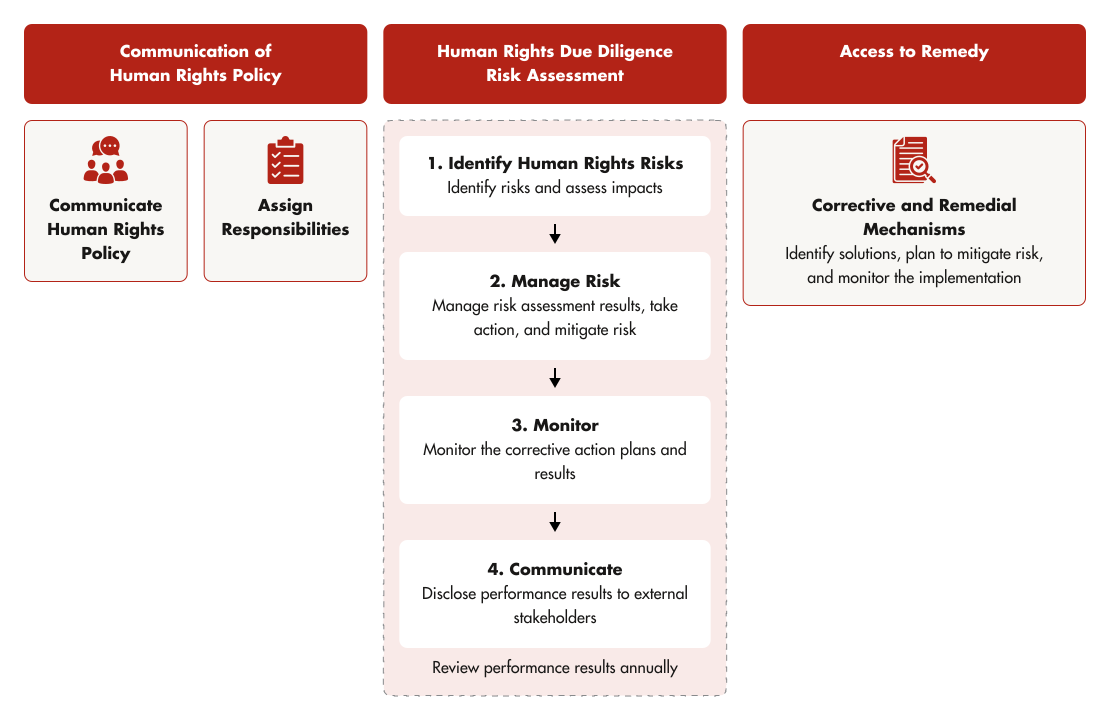
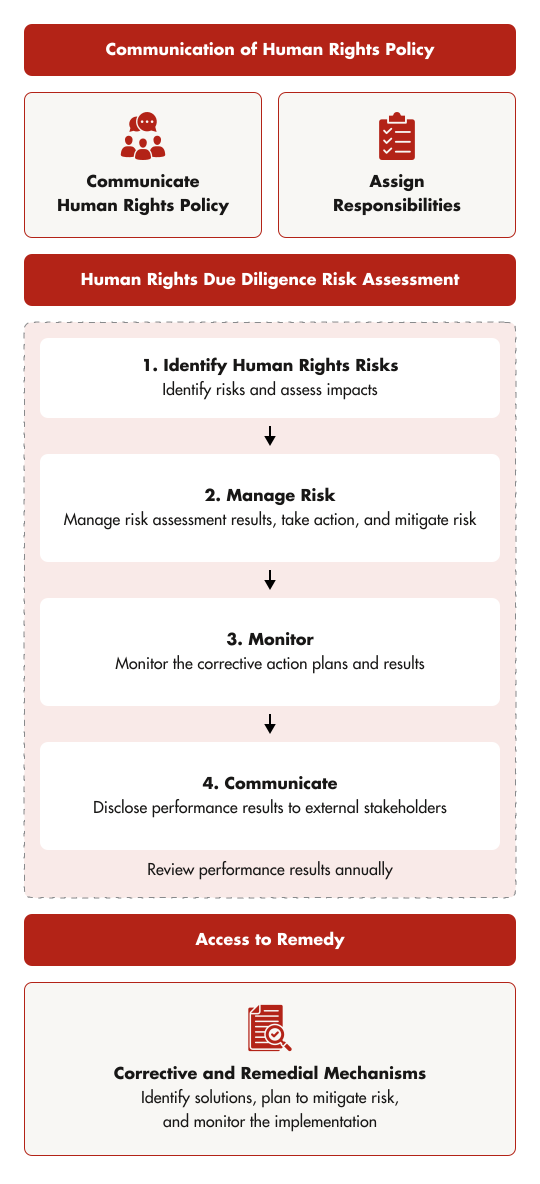
To identify issues and assess the risks and impacts of human rights violations across the entire value chain and among all affected stakeholders, the Company plans and establishes measures to prevent, mitigate, manage, and remediate any potential or actual human rights impacts. The Company has set human rights guidelines approved by the Human Rights Committee and implements internal human rights practices, requiring suppliers and contractors to comply with the Company’s human rights policy. This ensures that no human rights violations occur and that appropriate remedies are provided to those who may be affected by the business operations of partners.
Key Human Rights Risk Issues
Health and safety of employees, contractors, and suppliers
| Operational Plan, Preventive and Corrective Measures | Performance |
|---|---|
|
|
|
|
|
|
|
|
Data breaches and misuse of personal data
| Operational Plan, Preventive and Corrective Measures | Performance |
|---|---|
|
|
|
|
|
|
|
|
|
Remark: LTIFR refers to The Lost Time Injury Frequency Rate for employees
Mechanisms for Remediation in Cases of Human Rights Violations
The Company integrates the results of risk assessments from all activities and operational sites. It identifies potential risks and establishes plans to minimize their likelihood and impact. Departments responsible for managing these risks are required to develop human rights risk mitigation plans and continuously supervise, monitor, and audit operations to ensure compliance with the plans. This process aims to reduce the likelihood of risks and impacts on all stakeholders across the business value chain. In the event that human rights risks materialize and stakeholders are affected, the Company will implement corrective and remedial actions in accordance with its established guidelines.
Remedy Guidelines
The Company has established guidelines for compensating stakeholders and vulnerable groups in cases of ongoing human rights violations. This includes transparent communication throughout the process until normal conditions are restored. Compensation measures may include a formal apology, indemnification, monetary and non-monetary compensation, and assistance in accessing other available remedies for affected individuals.
Apology
(Offer an official, direct apology to individuals who have been impacted)
Indemnification
Compensation
Non-Monetary Compensation
Growth opportunities, recognition, and other benefits
Assist in Accessing Other Remedies
Stakeholders Directly Impacted

Shareholders
Benefits Received
- Confidence in doing business with good corporate governance, transparency, and respect for human rights
- Reduced legal and reputational risks for the Company
- Creation of long-term value and returns
Potential Impacts
- In the event of a human rights violation, it may cause damage to the Company’s reputation and undermine investor confidence.
- Increased costs for remediation or corrective actions.

Customers
Benefits Received
- Assurance that the Company’s products and services are produced and delivered ethically
- Access to safe and non-discriminatory services
- Positive customer experience through respectful treatment of rights
Potential Impacts
- In the event of human rights violations, such as discrimination or personal data breaches, customer satisfaction and loyalty may be negatively affected.

Business Partners
Benefits Received
- Treated fairly, transparently, and based on human rights principles
- Clear labor standards and mutually agreed practices
- Sustainable collaboration within the supply chain
Potential Impacts
- If partners fail to comply with human rights and labor guidelines, it may pose risks to conducting business with the Company.
- Termination or suspension of the partnership.

Communities and Society
Benefits Received
- Supported and respected in terms of fundamental rights
- Job creation and improvement of local quality of life
- Participation in social and environmental activities
Potential Impacts
- In the event of human rights violations in operational areas, it may cause conflicts with local communities.
- Damage to the Company’s reputation.

Government and Others Agencies
Benefits Received
- Gain cooperation in complying with labor laws and human rights standards
- Support the enforcement of relevant laws and standards
- Reduce conflicts and legal disputes
Potential Impacts
- Failure to comply with laws may result in legal penalties or stricter regulatory scrutiny.
- Deterioration of relationships with government authorities.

Employees
Benefits Received
- Treated fairly and without discrimination
- Safe and friendly working environment with good hygiene and mental well-being
- Opportunities for skill development and career advancement
- Increased employee engagement and job satisfaction
Potential Impacts
- In the event of human rights violations, such as forced labor, discrimination, or personal data breaches, employee morale and work performance may be negatively affected.
- Higher employee turnover.