


Supporting the UN Sustainable Development Goals (SDGs)

The Company recognizes that sustainability is not merely a strategic trend, but a fundamental principle of responsible business - one that upholds long-term social, environmental, and economic responsibility.
Guided by the United Nations Sustainable Development Goals (SDGs), the Company uses these global goals as a key framework to align its operations with the evolving global context.


The Company has integrated the SDGs into every dimension of its business strategy, from developing environmentally friendly products and services, reducing greenhouse gas emissions, and improving energy efficiency, to optimizing resource management, promoting labor rights and equality, and strengthening governance and anti-corruption measures. These efforts are designed not only to enhance corporate competitiveness but also to create genuine shared value for all stakeholders.
Nevertheless, advancing the SDGs remains a challenging journey. The Company faces several external and systemic factors, including global economic volatility affecting supply chains and business costs, climate change impacts on operations and natural resources, and inconsistencies in sustainability reporting standards across regions, which complicate systemic impact assessments. Additionally, fostering comprehensive ESG practices among suppliers and business partners throughout the value chain requires strong collaboration and time.
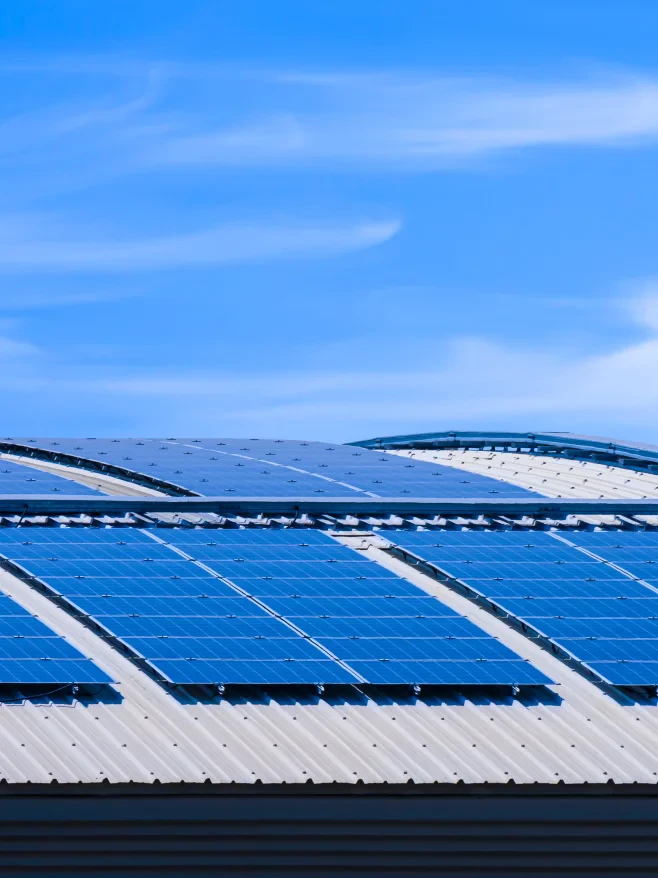

Despite these challenges, the Company views the SDGs as a strategic opportunity to transform its business toward a sustainable future. In an era when consumers, investors, and business partners increasingly value transparency, accountability, and positive social impact, sustainability-driven innovation, such as health-oriented products, clean energy adoption, circular packaging design, and efficient resource management, represents both a business advantage and a contribution to global well-being.
Furthermore, collaboration with government agencies, private enterprises, and civil society offers opportunities to amplify positive impacts and scale up shared learning toward long-term sustainable growth.
The Company reaffirms its unwavering commitment to being part of the global movement for sustainable development through efficient, transparent, and responsible operations that generate meaningful, positive change for business, society, and the planet.

Key Dimension / Issue
Energy Management
- Electricity consumption per income is projected to decrease by 10% in 2027 compared to the base year 2023 (measurement unit: kilowatt-hours per million baht).
- Electricity consumption per area is projected to decrease by 5% in 2027 compared to the base year 2023 (measurement unit: kilowatt-hours per square meter).
Waste Management
Non-hazardous waste disposed of through landfilling per revenue is projected to decrease by 10% by 2027 compared with the base year 2023 (unit: tons per million baht of revenue).
Water Management
- Net water consumption per revenue is projected to decrease by 10% by 2027 compared with the base year 2023 (unit: cubic meters per million baht of revenue).
- Recycled water usage is projected to increase by 10% by 2027 compared with the base year 2023 (unit: cubic meters).
- The Company’s wastewater and effluent management complies with applicable legal requirements
- No complaints regarding water and wastewater.
Greenhouse Gas Reduction under the LESS Program
- Increase greenhouse gas emissions reductions from operations under the Low Emission Support Scheme (LESS) compared with the 2022 baseline year (Unit: tonnes of CO2 equivalent).
- Short term: 20% increase by 2027
- Medium term: 25% increase by 2032
- Long term: 30% increase by 2037
Greenhouse Gas Emissions Reduction
- Reduce Scope 1 and Scope 2 carbon dioxide (CO2) emissions compared with the 2025 baseline year (Unit: tonnes of CO2 equivalent per unit area).
- 0.5% by 2026
- 0.8% by 2028
- 2% by 2032
- Reduce total greenhouse gas emissions (Scope 1 and Scope 2) compared with the 2025 baseline year (Unit: tonnes of CO2 equivalent per million baht of revenue).
- 5% by 2028
- 8% by 2032
- Reduce greenhouse gas emissions from operations (Scope 1 and Scope 2) compared with the baseline year.
- 47% by 2030
Carbon Neutrality
- Achieve Carbon Neutrality by ensuring that greenhouse gas emissions released into the atmosphere are balanced by an equivalent amount removed or offset.
- By 2050
Net Zero Greenhouse Gas Emissions
- Achieve Net Zero greenhouse gas emissions.
- By 2065
Develop Eco Product and Eco Packaging
- Increase the proportion of new products incorporating natural materials to 6% of the new product portfolio by 2027.
- Increase the proportion of Younique brand furniture (customized products that optimize resource use in furniture production) to 10% of total furniture revenue by 2026.
Environment Management
Zero complaints regarding environmental management.
Post consumption Material Management
Increase the use of renewable and recycled materials in production processes.
Innovative products for a better life
- Develop products and services that improve the quality of life of consumers and society.
- Health and well-being enhancement: Increase the proportion of ergonomically designed products and health-focused products to 20% of the new office furniture product portfolio within 2026.
- Products for the elderly account for at least 10% of all new products launched each year.
Human Rights and Labor Practices
Zero human rights violations.
Health and Safety
- Zero work-related fatalities among employees.
- Zero work-related fatalities among contractors and business partners.
- Reduce the Lost Time Injury Rate (LTIFR) of employees compared with the base year 2023:
- Short term: 20% reduction by 2027
- Medium term: 25% reduction by 2032
- Long term: 30% reduction by 2037
- Reduce the Lost Time Injury Rate (LTIFR) of contractors and business partners compared with the base year 2024:
- Short term: 10% reduction by 2027
- Medium term: 15% reduction by 2032
- Long term: 20% reduction by 2037
- Zero health and safety complaints among employees, contractors, and business partners.
Community Engagement
- External employment under the Tao kae noi project accounts for 70%.
- Zero complaints regarding impacts of operations on communities and society.
- Implement one community engagement project per year related to ESG dimensions.
- 100% of the Company’s core areas are covered by CSR projects.
Employee Engagement
- Average employee engagement scores:
- Short term: 85% by 2026
- Medium term: 87% by 2029
- Long term: 90% by 2034
Employee Management
- Achieve Employee Best Choice recognition by 2032.
- Increase employment of elderly compared with the base year 2024:
- Short term: 2x increase by 2027
- Medium term: 5x increase by 2029
- Long term: 8x increase by 2034
- No labor disputes or labor and social complaints.
People Management
- Average training hours per employee per year:
- Short term: 12 hours by 2026
- Medium term: 30 hours by 2029
- Long term: 40 hours by 2034
Customer experience
- Customer satisfaction above 95% in 2026.
- Customer Retention Rate above 90% within 206
- Customer Compliant Resolution Rate equal to 100% according to SLA policy
Data security and digital adoption
Zero data breach incidents.
Governance and anti-corruption
Zero fraudulent transactions.
